Retail sourcing and product development hiring heats up in 2026
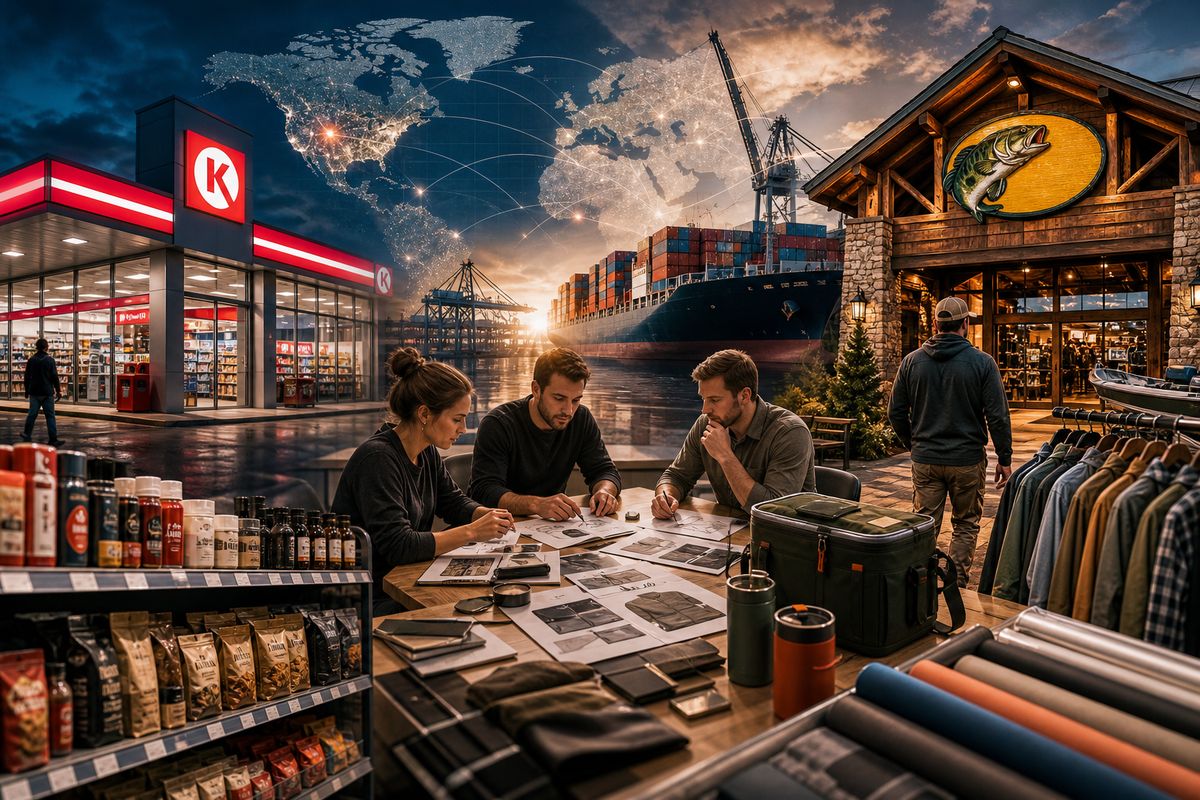
Retail sourcing and product development is having a moment, and it is not hard to see why. Across convenience retail and outdoor specialist brands, companies are sharpening their private brand and owned brand playbooks, then staffing up the people who can actually deliver product, on time, at the right cost, without wrecking quality. The latest signals come from three very different corners of the market: Circle K, Bass Pro Shops, and Orvis.
Circle K’s listing for a “Manager, Sourcing and Product Development, Private Brands” is now closed, with the company stating the role “has been filled” on its careers site. Bass Pro Shops, meanwhile, is actively recruiting a “Sourcing and Product Developer, Apparel”, explicitly on site at its Springfield, Missouri corporate office, with international travel baked in. And on LinkedIn, sourcing and product development leader Carrie Kessler amplifies Orvis’s search for a Director of Design, Development and Sourcing for Fish and Hunt hard goods and gear, a role framed as end to end ownership of innovation, performance, margin, and timing.
None of this is flashy. But it is a big deal. These are the roles that decide whether a retailer’s product strategy becomes a profitable reality or an expensive lesson in delays, misreads, and markdowns.
The specific developments: Circle K fills a private brand role, Bass Pro recruits, Orvis raises the bar
The clearest “event” in the source material is Circle K’s confirmation that its private brands sourcing and product development manager vacancy is filled. The job page does not provide the original posting details, but it does provide useful corporate context: Circle K describes a global footprint of 150,000 people across over 17,300 stores in 27 countries, positioning itself as a scale operator where private brand decisions can ripple quickly across markets. That scale matters, because private brand sourcing is rarely about a single hero product. It is about repeatable systems, supplier relationships, and governance that can handle volume.
Bass Pro Shops’ open role is more explicit about what employers now expect from a sourcing and product developer. The position summary states it is on site in Springfield, Missouri and “not open to remote or hybrid work”. The remit is broad: lead execution of brand and category strategy, act as the key driver from concept through delivery, and implement strategies to maximise gross profit while protecting design integrity and brand aesthetics. In other words, it is not a procurement-only job, and it is not a design-only job. It is the connective tissue between the two.
Orvis’s role, shared via Carrie Kessler’s LinkedIn activity, is pitched as a “rare” opportunity: Director of Design, Development and Sourcing for Fish and Hunt hard goods and gear. The description emphasises technical leadership across reels, waders, boots, and hard goods, plus cross functional partnership with merchandising, sourcing, marketing, finance, and leadership. It also flags “critical requirements” such as a strong mechanical engineering or industrial design background, deep knowledge of materials and manufacturing processes, and practical fishing experience. That is a telling combination. Orvis is effectively saying: this is not a lifestyle brand job, it is an engineering and performance job that happens to sit inside retail.
Why retail sourcing and product development is suddenly centre stage
At a basic level, retailers are chasing three things at once: margin, speed to market, and brand differentiation. Those goals collide in sourcing and product development. When a company tries to improve margin, it pushes on cost, duty exposure, and supplier efficiency. When it tries to move faster, it pushes on development calendars, sampling cycles, and decision rights. When it tries to differentiate, it pushes on materials, construction, performance, and design details. One team ends up holding the stress. That team is product development and sourcing.
Bass Pro’s job description reads like a checklist of modern pressures. The developer is expected to coordinate designers, technical designers, merchandising, and vendors; manage the seasonal timeline from strategy through sample reviews and approvals; and address roadblocks with solutions. There is also a heavy commercial spine: implement strategies that maximise gross profit, create cost analysis, prepare negotiation strategies, and recommend product allocation proposals based on vendor capabilities and tariff and duty considerations. That is not a “nice to have”. It is the job.
Circle K’s filled private brands role points to another trend: convenience retail continues to professionalise private label and treat it as a strategic growth engine rather than a low cost alternative. A chain operating at Circle K’s scale can use private brands to build loyalty, protect margin, and reduce direct comparability with competitors. But it only works if sourcing and development are disciplined. Poor quality in a private brand does not just hurt one SKU, it dents trust in the banner.
And Orvis’s hunt and fish hard goods focus highlights a third dynamic: in performance categories, product development is not simply about aesthetics. It is about engineering, testing, and credibility with serious users. The LinkedIn repost explicitly calls out “best in class” standards across performance, quality, margin, and timing, with “no compromise”. That is a high wire act, and it requires senior leadership that can balance trade-offs without losing the plot.
Key players and what their roles reveal about the market
Circle K: private brands at global scale
Circle K positions itself as a global operator with 17,300 plus stores and a presence in 27 countries. That scale changes the nature of sourcing and product development. Supplier selection is not only about unit cost, it is about capacity, compliance, consistency, and the ability to support multi market rollouts. It also raises the stakes on data governance and process, because small errors multiply quickly when volumes are large.
The job listing itself is no longer available, so it is not possible to cite the specific responsibilities Circle K set for the role. But the fact it is filled is still meaningful. It suggests Circle K is actively investing in private brand capability, and that it can attract talent into a function that often sits behind the scenes. In 2026, that is a competitive advantage, not a back office detail.
Bass Pro Shops: a hybrid commercial and technical operator
Bass Pro’s “Sourcing and Product Developer, Apparel” role is unusually transparent about the day to day mechanics. The developer owns execution of product development and sourcing strategies, acts as the primary liaison between design, technical design, merchandising and vendors, and leads cross functional partners through the product development timeline. It also requires maintaining product data in a PLM system, specifically “PLM/Centric”, a reference to Centric Software, widely used for product lifecycle management in apparel and retail.
There is also a clear expectation of seniority: 7 to 10 years’ work experience, with at least five years in a product development role, and experience working with an international supply base. Travel is “less than 20 days per year”, domestic and international. The role is not remote. Bass Pro is effectively prioritising in person collaboration and hands on sample review, which makes sense for apparel construction, fit, and materials decisions that can be hard to resolve over a video call.
Orvis and Carrie Kessler: elevating technical leadership in hard goods
The Orvis role, surfaced through Carrie Kessler’s LinkedIn activity, is framed as leadership of a “highly technical team” designing reels, waders, boots, and hard goods. It calls for mechanical engineering or industrial design background, deep knowledge of manufacturing processes, and real world fishing experience. That combination is a clue to where premium outdoor retail is heading: closer to product engineering cultures, and further from purely seasonal fashion cycles.
As for Kessler, the LinkedIn page visible in the source material describes her as a “results obsessed product development and sourcing leader” with 20 years in apparel. The page also notes she can introduce people to contacts at Orvis, implying a strong network in the outdoor and retail space. It is not a formal corporate announcement, but it is still part of how senior hiring now happens. Roles like this travel through networks first, then through job boards.
Industry analysis: margin, tariffs, PLM discipline, and the end of “good enough” sourcing
Look closely at Bass Pro’s responsibilities and a pattern emerges. The sourcing and product developer is expected to understand vendor and factory capabilities, tariff and duty, and recommend product allocation proposals. That is a direct response to a world where landed cost volatility can erase margin quickly. The source material does not provide specific tariff rates or country exposures, so no precise claims can be made here. But the inclusion of tariff and duty in a job description tells its own story: retailers want product leaders who can model cost drivers and make allocation decisions proactively, not after the fact.
PLM discipline is another tell. Bass Pro explicitly requires accurate product data management in PLM, with Centric referenced. That matters because product development is increasingly a data problem as much as a creative one. Bills of materials, testing requirements, factory audits, and sample approvals all need traceability. When that information lives in email threads and spreadsheets, timelines slip and errors creep in. When it lives in PLM, organisations can scale, and new team members can onboard without tribal knowledge.
Then there is the quality and performance bar. Orvis’s description is blunt about “no compromise” and about building gear serious anglers and hunters rely on. That is not marketing fluff. In performance categories, returns and warranty claims are expensive, but reputational damage is worse. Consumers in these niches talk, loudly, and they remember. The implication is that Orvis is treating product leadership as a strategic lever for brand trust and long term customer value, not merely seasonal assortment planning.
Circle K’s private brand hiring, meanwhile, fits a broader retail pattern: private label is no longer just a cheaper option. It is a brand architecture strategy. When executed well, it can lift margin and create differentiation. When executed badly, it becomes a race to the bottom. Filling a manager role in sourcing and product development suggests Circle K is leaning towards the former, building internal capability to manage quality, supplier performance, and product consistency across a very large footprint.
Historical context: from cost cutting to capability building
Retail sourcing used to be treated, unfairly, as a cost cutting function. Find a cheaper factory, negotiate harder, move on. That approach worked, until it did not. As supply chains globalised and product complexity increased, the hidden costs of poor development became obvious: missed launches, inconsistent quality, compliance issues, and markdowns that wiped out any savings. The modern job descriptions reflect that evolution. They are asking for leaders who can integrate design intent, technical execution, and commercial outcomes.
The Bass Pro role is a good example of how the function has broadened. It includes cost negotiation and margin initiatives, but also technical pack accuracy, sample reviews, testing procedures, and coordination with quality teams for audits. That is a full lifecycle view. It is also a sign that retailers are trying to reduce handoffs, because every handoff is a chance for miscommunication and delay.
Orvis’s emphasis on engineering and real world fishing experience echoes a longer history in outdoor retail, where credibility is earned through performance. Brands that win in this space often behave more like product companies than merchandisers. They invest in materials knowledge, testing, and iterative development. The role described is essentially a senior product and engineering leader embedded in a retail organisation, which would have been less common in mainstream retail hiring a decade or two ago.
And Circle K’s private brand focus reflects the steady rise of owned brands across grocery, convenience, and mass retail. The difference in 2026 is that private brand is increasingly expected to be good, sometimes better than national brands, not merely cheaper. That expectation forces retailers to professionalise sourcing and development, and to hire accordingly.
What This Means For You
For retail professionals, the message is straightforward: sourcing and product development careers are becoming more strategic, more technical, and more cross functional. Candidates who can speak the language of design, costing, and factory capability in the same meeting are in a strong position. Practical steps help: build fluency in landed cost drivers (including duty and tariff concepts), get comfortable with PLM systems such as Centric Software, and be prepared to show how they have managed timelines from concept to production without quality slipping. Employers are clearly selecting for people who can remove roadblocks, not just report them.
For retailers and brand leaders, these postings are a reminder that process is a competitive weapon. If product data is messy, if decision rights are unclear, or if supplier performance is not measured consistently, margin and speed targets become wishful thinking. Investing in senior product development and sourcing leadership is one lever. But so is tightening the operating model: clearer calendars, fewer last minute changes, stronger technical design inputs, and better vendor segmentation based on capability rather than habit. The Bass Pro description, with its emphasis on cross functional leadership and accurate BOMs, is basically a blueprint for where operational discipline pays off.
For suppliers and factories, the bar is rising. Retailers are explicitly looking for partners who can support engineering alternatives, meet testing requirements, and move quickly through sample iterations. The days of winning business purely on price are fading in many categories. Suppliers that can demonstrate repeatable quality, transparent costing, and strong communication across time zones will find it easier to become preferred partners. And once a supplier is preferred, it tends to stick, because switching costs in complex categories are high.
Closing thoughts: a quiet hiring signal with loud implications
There is no single blockbuster announcement here. No merger. No quarterly earnings surprise. Just a set of hiring signals that, taken together, point to a clear shift in 2026: retailers are treating sourcing and product development as core capability, not support function. Circle K fills a private brands role in a business that operates at enormous scale. Bass Pro Shops spells out a demanding, on site product developer remit that blends margin accountability with technical execution. Orvis, amplified through Carrie Kessler’s network, hunts for a senior leader who can engineer performance gear and still hit timing and margin.
And that is the story. Retailers are not simply buying product, they are building it, managing it, and defending it. The companies that get this right will ship better goods, waste less time, and protect margin without leaning on endless promotions. The ones that do not will keep paying the same old tax: late launches, inconsistent quality, and customers who quietly drift away.
In other words, the most important retail battles in 2026 are not always fought on the shop floor. They are fought in the product calendar, the cost sheet, the sample room, and the supplier meeting where someone finally says, “No, that is not good enough.”