
FBM returns to the spotlight as Amazon sellers rework their fulfilment maths
Fulfillment by Merchant (FBM) is back at the centre of the Amazon seller conversation in 2026, and it is not because anyone has suddenly fallen out of love with Prime. It is because the economics of Fulfillment by Amazon (FBA) keep getting more complicated, and sellers are responding in the most rational way possible: they are rechecking the numbers, SKU by SKU, and shifting fulfilment strategies where the margin no longer holds.
The immediate trigger is not a single dramatic announcement, but a very clear set of cost signals that sellers can no longer ignore. Source material points to Amazon raising FBA fulfilment fees effective 15 January 2026, with increases averaging approximately $0.08 per unit across most size tiers, described as roughly 3 to 5 percent on average. Add in storage fees, aged inventory surcharges, and the low inventory level fee that has existed since April 2024, and the old assumption that FBA is always the simplest path to growth starts to look, frankly, a bit lazy.
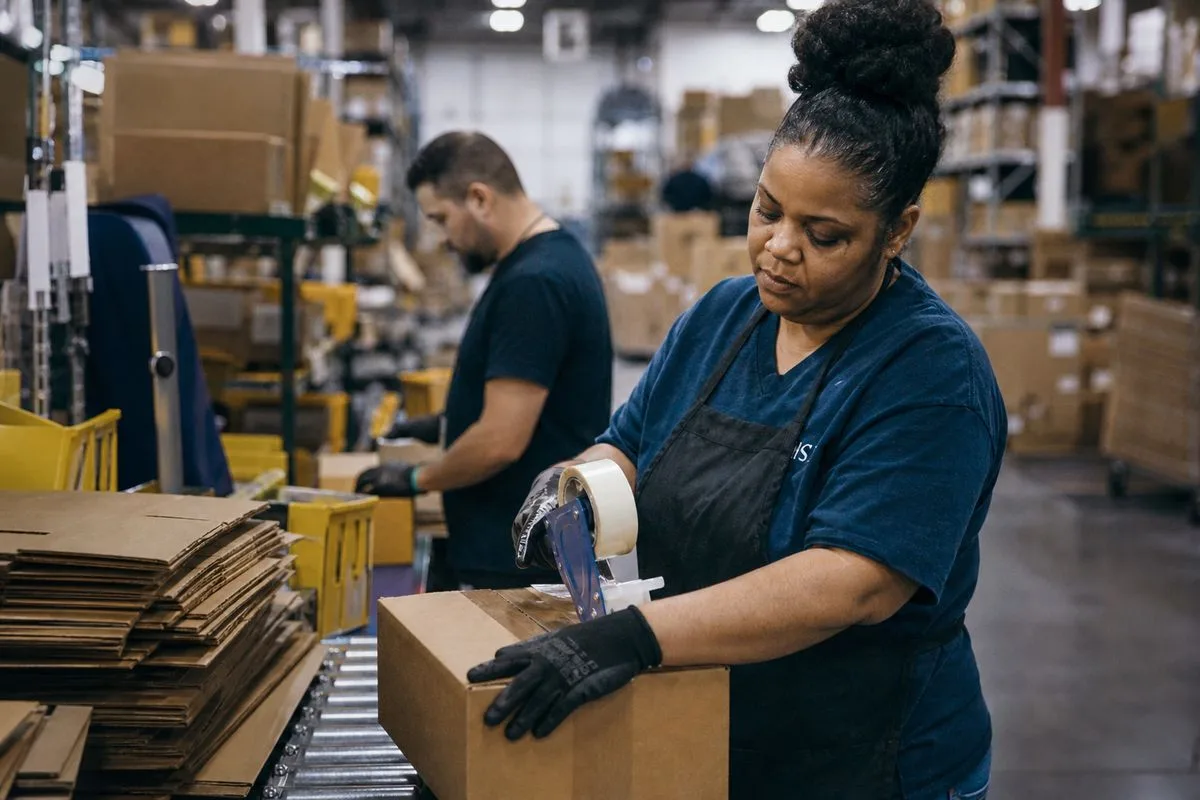
And that is where FBM re-enters the frame. FBM means the seller manages storage, picking, packing, shipping, and customer service directly, either in house or via a third party logistics provider. It is not exactly groundbreaking as a concept. But in 2026, it is becoming strategically important again because it gives sellers levers they can actually pull: packaging control, shipping rules, inventory placement, and the ability to avoid certain Amazon fees that compound over time.
The 2026 development: sellers shift from default FBA to deliberate FBM and hybrid models
The news development is best described as a renewed shift towards FBM and hybrid fulfilment among Amazon marketplace sellers in 2026. The logic is straightforward. FBA still offers powerful benefits, including automatic Prime eligibility and Amazon handling returns and customer service. But the fee stack has become dense enough that sellers are increasingly treating FBA as one tool among many, rather than the default setting.
In the source material, the fee pressure is not abstract. It is specific. Amazon charges a referral fee on every sale regardless of fulfilment method, with rates for many common categories falling between 8 percent and 15 percent. The examples given are concrete: electronics typically land at 8 percent; Clothing and Accessories uses a tiered structure of 5 percent for items $15 or under, 10 percent for items between $15.01 and $20, and 17 percent for items over $20. Some categories go higher, including Amazon Device Accessories at 45 percent. Those referral fees are the baseline. FBA then adds fulfilment fees, storage fees, and surcharges that can turn a seemingly healthy gross margin into something far more fragile.
That is why the current seller behaviour in 2026 is less about ideology and more about modelling. Sellers are increasingly comparing the all in cost of FBA, including storage and surcharges, against the operational cost of FBM, including warehouse labour, packaging, carrier rates, and customer service overhead. Many are also running both methods simultaneously, which Amazon allows, either across different products or even for the same ASIN. In practice, that hybrid approach is becoming a risk management strategy: keep FBA where it drives conversion and speed, use FBM where it protects margin or reduces inventory exposure.
Fulfillment by Merchant (FBM) explained: control, flexibility, and the real trade offs
Fulfillment by Merchant (FBM) is an order fulfilment method where the seller manages storage, packing, and shipping directly instead of relying on a third party fulfilment service like Amazon FBA. In plain terms, the seller owns the operational chain. That can mean a warehouse the seller operates, or it can mean outsourcing the physical work to a third party logistics provider while still keeping control of the customer experience and fulfilment decisions.
The appeal is control. FBM allows sellers to maintain full control over inventory, shipping processes, packaging, and customer service. That control can translate into flexibility, cost savings, and a more consistent brand experience, especially for businesses that already have logistics capability. It also helps sellers avoid certain fees associated with third party fulfilment programmes. The source material is explicit that FBM can support higher profit margins by optimising shipping speeds and reducing overhead, particularly when a seller uses a 3PL warehouse to store products and manage bulk shipping.

But FBM is not a free lunch. Without FBA, sellers do not automatically get the Prime badge. Delivery windows depend on shipping templates configured in Seller Central, and standard non Prime windows often run several business days. That can affect conversion versus Prime eligible listings, particularly in competitive categories where shoppers filter for Prime or simply expect next day delivery as the norm. Seller Fulfilled Prime (SFP) exists to close that gap, but it requires meeting strict ongoing performance thresholds. In other words, FBM gives freedom, but it also demands competence. If the seller cannot ship reliably and handle customer service at scale, the marketplace will punish them quickly.
FBA vs FBM in 2026: the fee stack, the surcharges, and why it changes behaviour
FBA remains a compelling proposition because it bundles operational complexity into a service: Amazon stores inventory, picks and packs orders, ships to customers, and manages returns and customer service. For many sellers, that is the difference between being able to scale and being stuck. But the source material lays out why sellers are re-evaluating in 2026: the fees stack up fast, and the surcharges are designed to nudge seller behaviour in ways that do not always align with a seller’s margin profile.
Start with fulfilment fees. These cover picking, packing, and shipping, and vary by size tier and weight, using the greater of actual versus dimensional weight. The source material notes that Amazon raised FBA fulfilment fees effective 15 January 2026, with increases averaging approximately $0.08 per unit across most size tiers, described as roughly 3 to 5 percent. It also provides directional examples: small standard items under 16 ounces typically run $3 to $5 per unit, large standard items run higher, and oversize can exceed $10 per unit before surcharges. Those are not trivial numbers if a product sells at a modest price point.
Then there is storage. Amazon charges monthly storage fees based on cubic feet of space inventory occupies in fulfilment centres. The source material highlights a key operational reality: peak season storage costs are roughly three times the off peak rate. That is a big deal for seasonal sellers who build inventory ahead of Q4, and it is equally painful for slow moving SKUs that sit longer than planned. Which leads directly to aged inventory surcharges. The source material states that the surcharge applies to items stored more than 181 days, with rates escalating at the 365 day mark. It notes that the 365 day tier is commonly cited as $6.90 per cubic foot or $0.15 per unit, whichever is greater, and that the fee runs monthly. The practical implication is brutal: a seller can be right about demand over the long term and still lose money if inventory velocity is wrong in the short term.
Finally, there is the low inventory level fee introduced in April 2024. The source material describes it as a surcharge applied when FBA stock is insufficient relative to historical sales velocity, meaning Amazon has to route fulfilment from distant warehouses, increasing its cost per shipment. Amazon passes that surcharge back to the seller. This particularly affects sellers who manage inventory lean, which is ironic because lean inventory is usually considered good operational practice. Put all of that together, and it is easy to see why sellers in 2026 are looking at FBM again. Not because FBA is broken, but because the cost of convenience has become more variable, and variability is hard to price into a business.
The logistics ecosystem behind FBM: 3PLs, warehousing scale, and why “control” does not always mean “DIY”
A common misconception is that FBM means a founder in a back room with a label printer. Sometimes it does, especially at the earliest stage. But in 2026, the more interesting story is how FBM increasingly sits on top of professional logistics networks. The source material explicitly frames FBM as fulfilment handled in house or through a 3PL provider, allowing businesses to streamline operations without losing control over customer interactions and brand reputation.
One example in the material is Buske Logistics, described as a Top 20 private 3PL with over 40 warehouses across North America, specialising in contract warehousing, contract logistics, transportation, and value added services. The point is not that every seller should use that specific provider. The point is that the 3PL market has matured to the point where a seller can outsource the physical work while still running an FBM model operationally. That can include bulk inbound handling, storage, pick and pack, and carrier management, while the seller retains control over packaging standards, shipping rules, and customer service policies.

This matters because it changes the trade off. The old FBA vs FBM debate used to be framed as scale versus control. In reality, 3PL backed FBM can offer both, at least for certain product types. It can also support multi channel fulfilment, which is increasingly relevant as brands diversify away from single platform dependency. And it can reduce the risk of being trapped by one network’s fee changes. When Amazon adjusts fees periodically, as the source material notes, sellers with a credible FBM capability have negotiating power with themselves. They can shift volume.
Industry impact: how the FBM resurgence reshapes pricing, Prime expectations, and marketplace competition
The broader industry implication in 2026 is that fulfilment strategy is becoming a competitive differentiator again. For years, the Prime badge and FBA’s operational simplicity pushed many sellers into the same playbook. That created a kind of uniformity: similar delivery promises, similar packaging, similar returns handling, and often similar cost structures. As more sellers adopt FBM or hybrid models, that uniformity starts to break.
One immediate effect is on pricing strategy. If a seller can avoid certain FBA costs, they may be able to price more aggressively, or they may choose to hold price and protect margin. Either way, it changes competitive dynamics within a category. But it is not automatic. FBM sellers must still pay Amazon referral fees, and those can be substantial depending on category. The source material’s examples, including the tiered Clothing and Accessories structure and the 45 percent referral fee for Amazon Device Accessories, underline a simple truth: fulfilment is only one part of the margin equation. Sellers who switch to FBM without understanding category fee structures can still end up squeezed.
Another effect is on customer expectations. Prime has trained shoppers to expect speed and predictability. FBM listings that offer slower delivery windows can lose conversion, even if the product is better or cheaper. That pushes serious FBM operators towards two paths: either invest in shipping performance to compete on speed, or differentiate on something else, such as custom packaging, bundling, or a more personal customer experience. The source material notes that FBM allows personalised service and stronger customer relationships. That sounds soft, but it can be commercially real in categories where unboxing, gifting, or brand perception matters.

And then there is Seller Fulfilled Prime. The source material positions SFP as a way for top performing FBM sellers to offer Prime delivery from their own warehouses, but with strict ongoing performance thresholds. In industry terms, SFP is Amazon’s way of saying: sellers can keep control, but they must meet the network’s service level. If more sellers succeed with SFP, it could increase competitive pressure on FBA sellers, because Prime eligibility would no longer be a near exclusive advantage of FBA. But if SFP remains operationally demanding, it will act as a filter, rewarding only those with strong logistics discipline.
Historical context: from “FBA first” to a more balanced fulfilment playbook
It helps to see the 2026 shift in context. Amazon’s marketplace has long incentivised sellers to use its fulfilment network by bundling convenience, customer trust, and Prime eligibility. Over time, that created a default mindset: start with FBA, then consider alternatives only when something breaks, such as storage limits, stranded inventory, or margin compression.
The source material reflects how that mindset is changing. It highlights not just the existence of fees, but the layering of fees: fulfilment fees, monthly storage fees, long term or aged inventory surcharges, and the low inventory level fee. Each fee is rational from Amazon’s perspective, because it prices operational cost and nudges sellers towards behaviours that make the network more efficient. But the cumulative effect is that sellers must manage FBA like a living system, not a set and forget service. Inventory velocity becomes a financial variable, not just an operational metric.
FBM, by contrast, looks more like traditional retail logistics, where the seller chooses how to store, ship, and service customers, and where cost control comes from process design and carrier negotiation. In earlier eras of e-commerce, that was the norm. What is different now is that sellers can combine modern 3PL infrastructure with marketplace demand, creating a hybrid model that borrows the best of both worlds. In that sense, the 2026 story is not a revolution. It is a rebalancing, driven by fee complexity and the maturity of outsourced logistics options.
What This Means For You
For sellers and operators, the practical takeaway is that fulfilment choice in 2026 is a margin strategy, not just an operational preference. The source material is clear that FBA costs can become substantial once referral fees, fulfilment fees, storage fees, and surcharges are combined, and it notes that the cumulative FBA cost per unit is commonly estimated at 25 to 40 percent or more of sale price for many categories, depending heavily on size, weight, price point, and inventory velocity. That means the right question is not “FBA or FBM?”, it is “Which SKUs belong in which fulfilment lane, and why?” Sellers who treat every product the same way are the ones who get surprised later.
Actionably, the most sensible move is to model fulfilment at the SKU level and revisit it regularly. Products that are slow moving, oversized, seasonal, or heavy often face disproportionate FBA pressure because storage and surcharges bite harder. The source material also notes that FBM is often more cost effective for large or heavy items and low velocity products, especially for sellers with existing warehouse infrastructure. If a business cannot justify building its own warehouse capability, it can still explore 3PL backed FBM, which preserves control while outsourcing the physical work. Either way, the goal is the same: reduce fee volatility and regain predictability in unit economics.
For brands that care about customer experience, FBM also opens up levers that FBA can limit. Packaging, inserts, bundling, and shipping rules can be tailored more tightly to brand standards. That said, performance discipline is non negotiable. Without automatic Prime eligibility, delivery promises must be realistic and consistently met, or conversion will suffer. And if a seller wants Prime speed without FBA, Seller Fulfilled Prime is the obvious route, but it demands operational excellence. In 2026, the winners are not the sellers who pick a side, they are the ones who build optionality and execute cleanly.
Closing thoughts: FBM is not a trend, it is a pressure valve
The most telling thing about the 2026 FBM resurgence is that it is not driven by hype. It is driven by arithmetic. When FBA fulfilment fees rise, when peak storage costs are roughly three times off peak, when aged inventory surcharges start at 181 days and escalate at 365 days, and when low inventory level fees penalise lean stocking, sellers naturally look for a pressure valve. FBM is that valve, because it returns control over inventory placement, shipping decisions, and cost structure to the seller.
None of this makes FBA obsolete. FBA remains a powerful growth engine, especially for products that move fast, fit neatly into standard size tiers, and benefit from Prime conversion. But the era of defaulting to FBA for everything looks increasingly dated. In 2026, the more professional approach is to treat fulfilment as a portfolio. Some SKUs belong in FBA, some belong in FBM, and many businesses will run both. Fair enough. That is what mature operators do: they keep options open, they measure what matters, and they refuse to let a single fee change dictate the future of the business.