E-commerce fulfilment becomes the competitive edge in 2026
Shoppers in 2026 rarely distinguish between a beautifully designed online store and the warehouse operation behind it. When an order arrives late, damaged, or with the wrong item, they blame the brand. E-commerce fulfilment, the business of receiving, storing, picking, packing, and shipping online orders, has moved from a back-office function to a core competitive advantage that determines customer loyalty and repeat purchase. From Netherlands-based operations with AI-powered forecasting to award-winning UK fulfilment centres, the pressure is on to deliver faster, cheaper, and more accurately than ever before.
According to the Cambridge Dictionary, e-commerce is simply the business of buying and selling goods and services on the internet. That definition may sound straightforward, but the operational reality is anything but simple. A single order can cross multiple systems, carriers, and national borders before it reaches a customer's door. And in 2026, customers expect that journey to happen within days, sometimes hours. The businesses that win are not necessarily the ones with the flashiest websites. They are the ones with the most intelligent, reliable fulfilment operations behind the scenes.

What does e-commerce fulfilment actually involve?
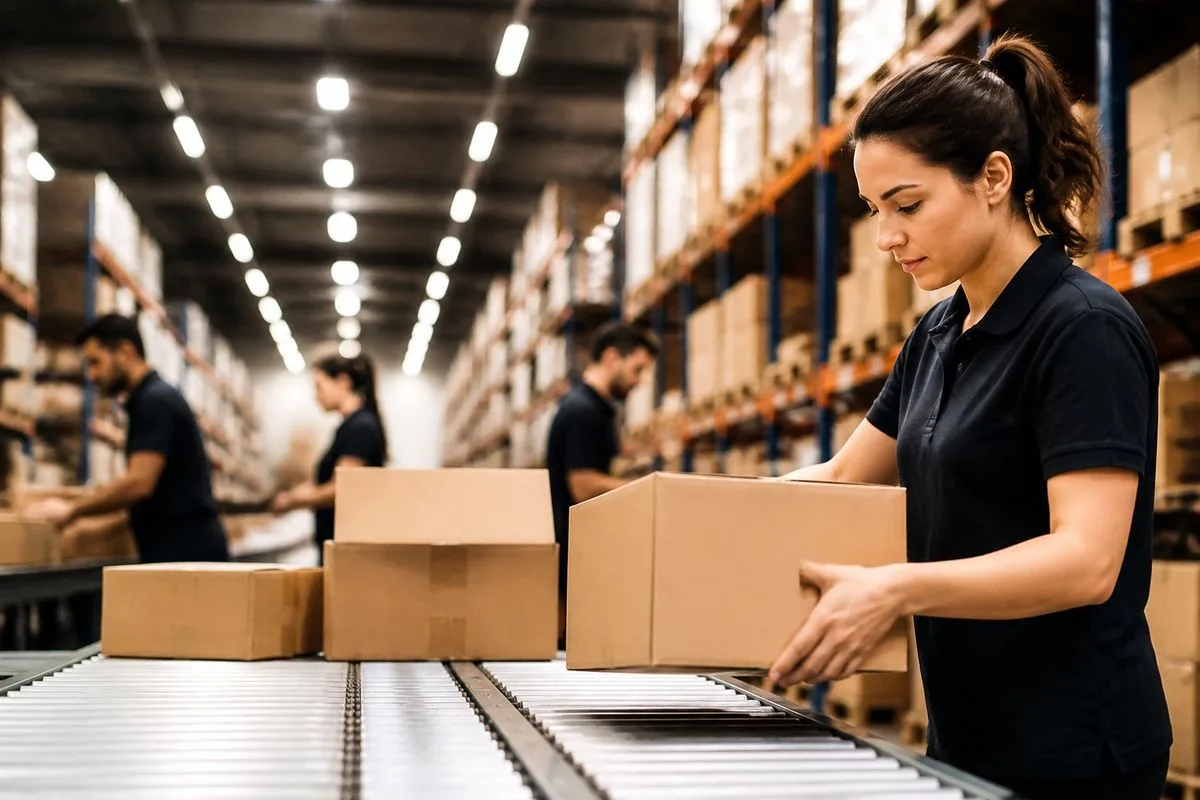
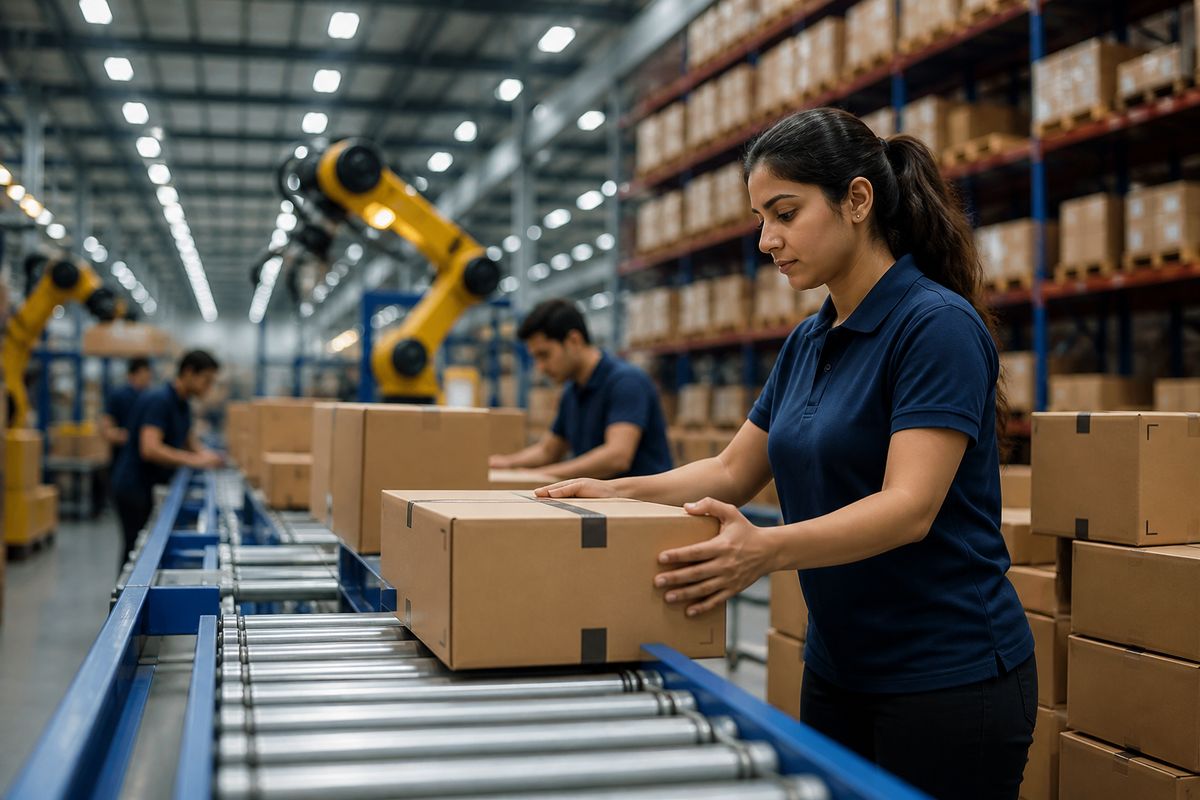
E-commerce fulfilment is a comprehensive logistics process that begins the moment a customer clicks the order button. It starts with inventory storage. Products need to sit somewhere secure, organised, and accessible, whether in a single warehouse or across a network of national and international facilities. From there, the fulfilment centre receives the order through an integration with the retailer's e-commerce platform or marketplace account. Warehouse staff, increasingly supported by robotics and AI-guided systems, pick the correct items from the shelves, pack them appropriately, print shipping labels, and hand the parcels to a carrier for last-mile delivery.
The scope of fulfilment services has widened considerably in recent years. Modern providers also handle returns management, which is a growing headache for online retailers. Returned items must be collected, inspected, quality checked, and either restocked or written off. Most fulfilment companies manage multiple sales channels too, including Shopify, Amazon, eBay, and branded online stores, all from one central inventory pool. A strong fulfilment partner provides what is called multi-channel fulfilment, meaning the same stock can be used to serve direct-to-consumer orders and wholesale or B2B orders without duplication.
Some providers go even further. Efulfilment Europe, a Netherlands-based fulfilment company, describes its service as covering the entire customer journey from click to delivery. Their model includes palletised and loose-item storage, real-time order confirmations, multiple carrier options, and frictionless returns. The company positions itself as a one-stop infrastructure layer for e-commerce businesses selling across Europe, with speed as the central promise. The underlying point is that fulfilment is no longer about storage alone. It is about intelligent orchestration of inventory, data, and transport.
The quiet rise of the third-party fulfilment specialist
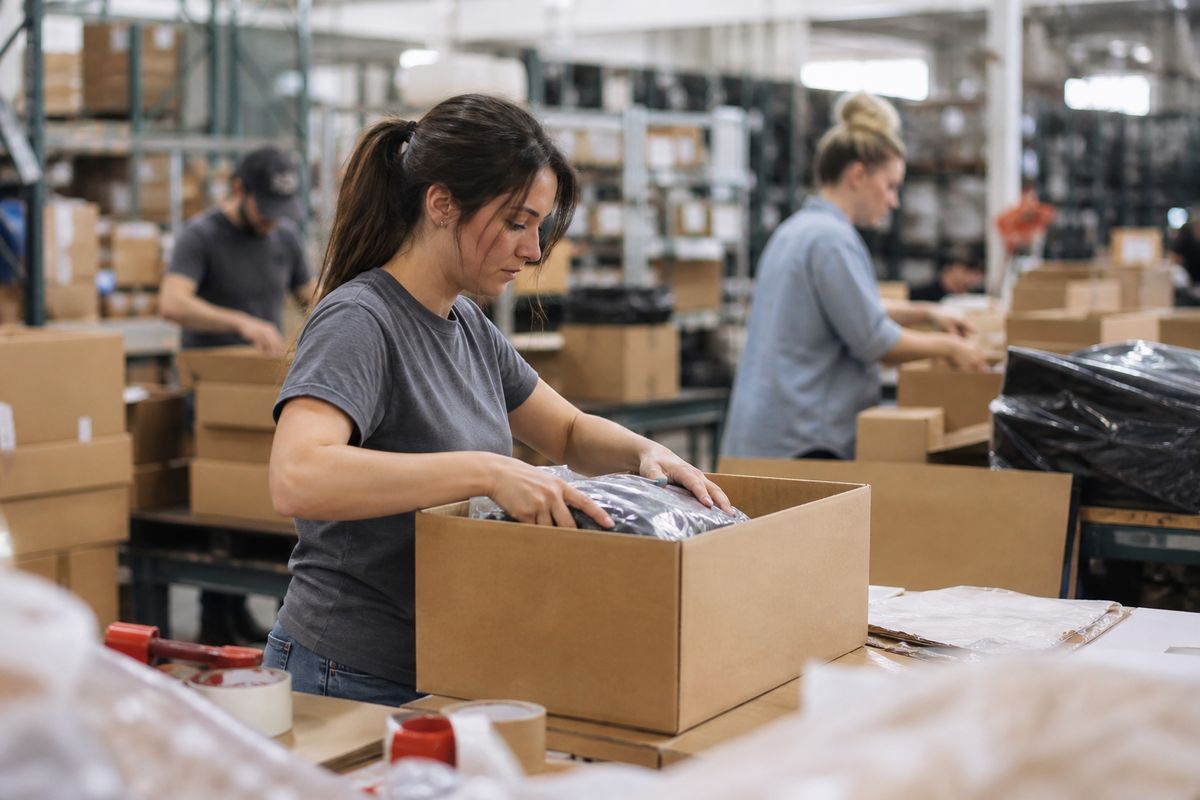
Many online retailers start by packing orders in their garage or spare room. It works when order volumes are manageable. But as sales grow, the time spent on fulfilment starts to crowd out product development, marketing, and customer acquisition. This is where third-party fulfilment specialists step in. By outsourcing picking, packing, and shipping to a dedicated partner, retailers can free up resources and scale without making huge capital investments in warehouse infrastructure.
In Europe, the fulfilment market has matured rapidly. The growth of e-commerce has created intense competition, and providers now differentiate on data intelligence, sustainability practices, and delivery speed. The result is that even small and medium-sized webshop owners can access infrastructure that was previously reserved for retail giants. For a startup in France or a mid-sized brand in Spain, having next-day delivery across six European countries is no longer a fantasy. It is an operational feature that can be bought from the right partner.
The rise of AI-driven e-commerce fulfilment in Europe
The most significant shift in the industry is the application of artificial intelligence to fulfilment operations. Efulfilment Europe, which operates a Netherlands-based network serving Belgium, the United Kingdom, France, Germany, and Spain, has made AI the core of its value proposition. Its promotional material claims that predictive algorithms analyse historical data, seasonal trends, and market signals to optimise stock levels. The company says this can reduce overstock by up to 30% while maintaining availability of 99.5% or higher. These are serious claims, even if they remain marketing messages until independently verified.
AI also affects the physical handling of goods. In Efulfilment Europe's warehouses, AI-guided picking systems aim to reduce errors by 98% and increase pick rates by 40%. The idea is simple: instead of trusting human memory or paper lists, workers are directed by intelligent systems that calculate the most efficient route through the warehouse and the optimal order for assembling multiple items. It saves time and reduces the risk of sending a customer the wrong shade of lipstick or an incorrect laptop charger.
Beyond the warehouse floor, AI supports carrier selection. Fulfilment systems can decide, for every individual order, whether a parcel should go with a low-cost courier or a premium express service, taking into account destination, weight, delivery promise, and cost. This might not sound revolutionary until you consider the scale of modern e-commerce. A business shipping tens of thousands of orders per month could save thousands of pounds simply by automating routing decisions that a human team would struggle to make consistently.
Same-day processing and the new speed standard
Consumer expectations have shifted. As Efulfilment Europe points out, next-day delivery is no longer an optional extra; it is a baseline expectation. The company promotes same-day processing and delivery the following day across major European markets. For online stores, this speed builds loyalty and reduces cart abandonment at checkout, because shoppers know their order will arrive promptly. The infrastructure behind it involves strategically located warehouses, sophisticated inventory forecasting, and a dense carrier network. None of it happens by accident.
There is also a claim that the system learns with every transaction. Every order, shipment, and return feeds data back into the AI model. Over time, the forecasting algorithms adjust to seasonality, changing consumer preferences, and even weather patterns that influence buying behaviour. This continuous improvement cycle is what separates mature fulfilment providers from simple storage and dispatch operations.
Inside the UK's award-winning e-commerce fulfilment market
The United Kingdom has its own thriving fulfilment sector, marked by consolidation, customer service competition, and strong demand from growing consumer brands. One prominent player is MCF, a UK fulfilment centre that advertises multi-site coverage across the country and holds an array of industry awards. MCF positions itself as a family-owned operation, and its award list includes Best eCommerce Fulfilment 2025, Best Reverse Logistics UK, Best Fulfilment Centre North UK, and an Award of Excellence for 2025. These accolades point to the breadth of services that UK brands now expect from their logistics partners.
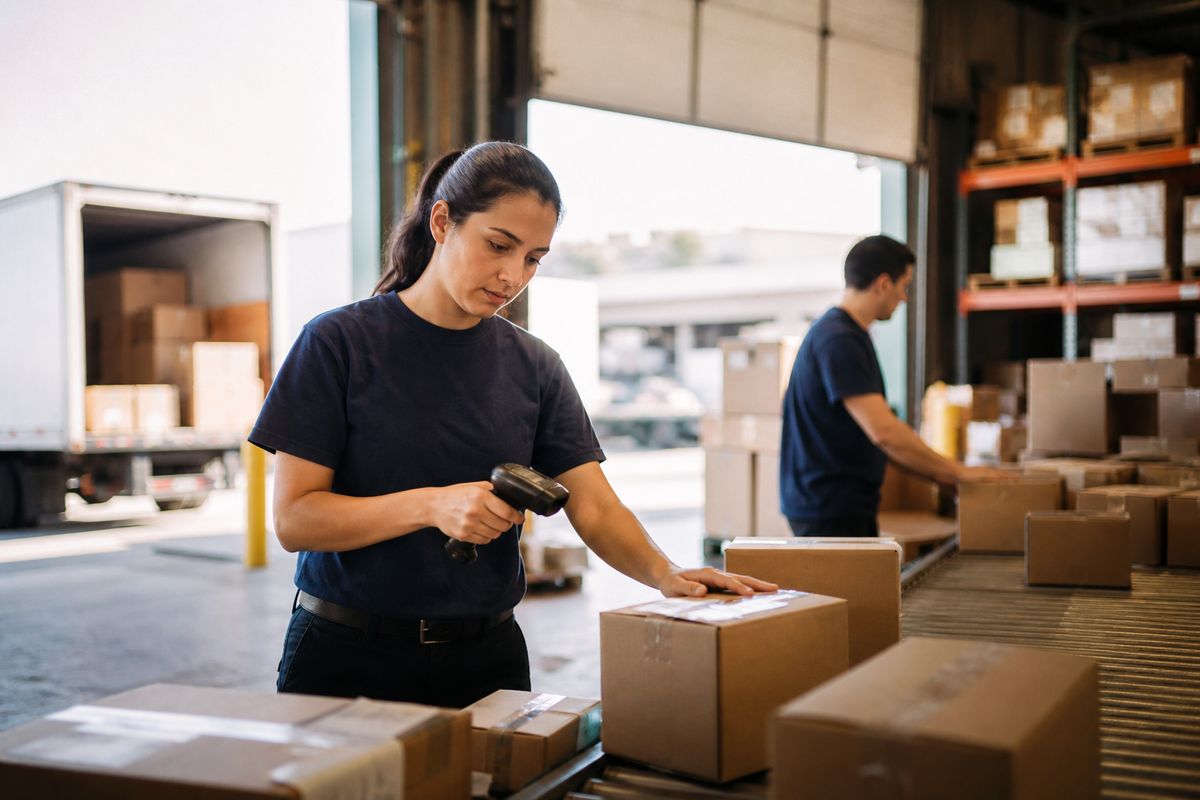
MCF's operational scale is significant, with around 12,000 pallet spaces and three fulfilment centres in the UK. The company connects with more than 100 store and marketplace connectors, allowing retailers to manage orders from multiple sales channels through a single interface. Their service catalogue covers e-commerce fulfilment, logistics, pick and pack, dropshipping, retail and B2B fulfilment, and international freight. This reflects a broader trend in which UK fulfilment providers become one-stop partners rather than single-function warehouses.
One of the more distinctive features on offer is FEFO, or First Expired, First Out, stock management. This is essential for products such as food supplements and cosmetics, where expiry dates matter. Managing stock by expiry date reduces waste and prevents brands from sending out-of-date items, a risk that grows as e-commerce expands into grocery and healthcare categories. The same provider also supports Seller Fulfilled Prime (SFP), allowing sellers to list as Prime on Amazon while using their own warehouse. This kind of flexibility demonstrates how fulfilment centres must now integrate with marketplace ecosystems rather than simply shipping parcels.
Returns as a competitive weapon
Reverse logistics, the flow of goods from customer back to seller, is often ignored until it becomes a headache. MCF treats returns as a core service, collecting items, conducting quality checks, and restocking them where possible. It advertises an approach to returns that minimises waste and keeps customer relationships intact. For fashion retailers in particular, return rates of 30% to 40% are common, and handling that flow efficiently is essential for profitability.
UK fulfilment centres have also embraced the concept of branded packaging. Instead of using generic brown boxes, many providers allow retailers to design custom packaging that reinforces the brand before the customer even opens the parcel. Unboxing experiences drive social media shares and repeat purchases. Done properly, branded packaging adds value at a modest cost, and it can be the difference between a customer filming the unboxing and throwing the box in the recycling bin without a second thought.
Why delivery speed and data intelligence now shape online retail
Across Europe and the UK, the same competitive forces are at play. Cost per order matters, but so does the cost of losing a customer due to one bad delivery experience. A 2026 shopper who misses a parcel or receives a damaged product will not wait for an apology. They will order from a larger retailer with more reliable logistics. This is why businesses of all sizes are re-evaluating their fulfilment strategies. The choice is no longer between building an in-house team or outsourcing. It is about which fulfilment partner offers the right combination of proximity, speed, and intelligence.
One approach is to position inventory in multiple locations to shorten delivery routes. A Netherlands-based hub, for example, allows a seller to reach much of the European Union quickly. A separate UK hub avoids customs delays that might arise for EU-to-UK shipments. Interestingly, Efulfilment Europe claims next-day delivery across the United Kingdom from its Netherlands hub, which suggests strong cross-border carrier networks. Meanwhile, UK-based MCF advertises next-day delivery domestically and uses smart shipping logic to assign carriers based on order value, service name, and weight.
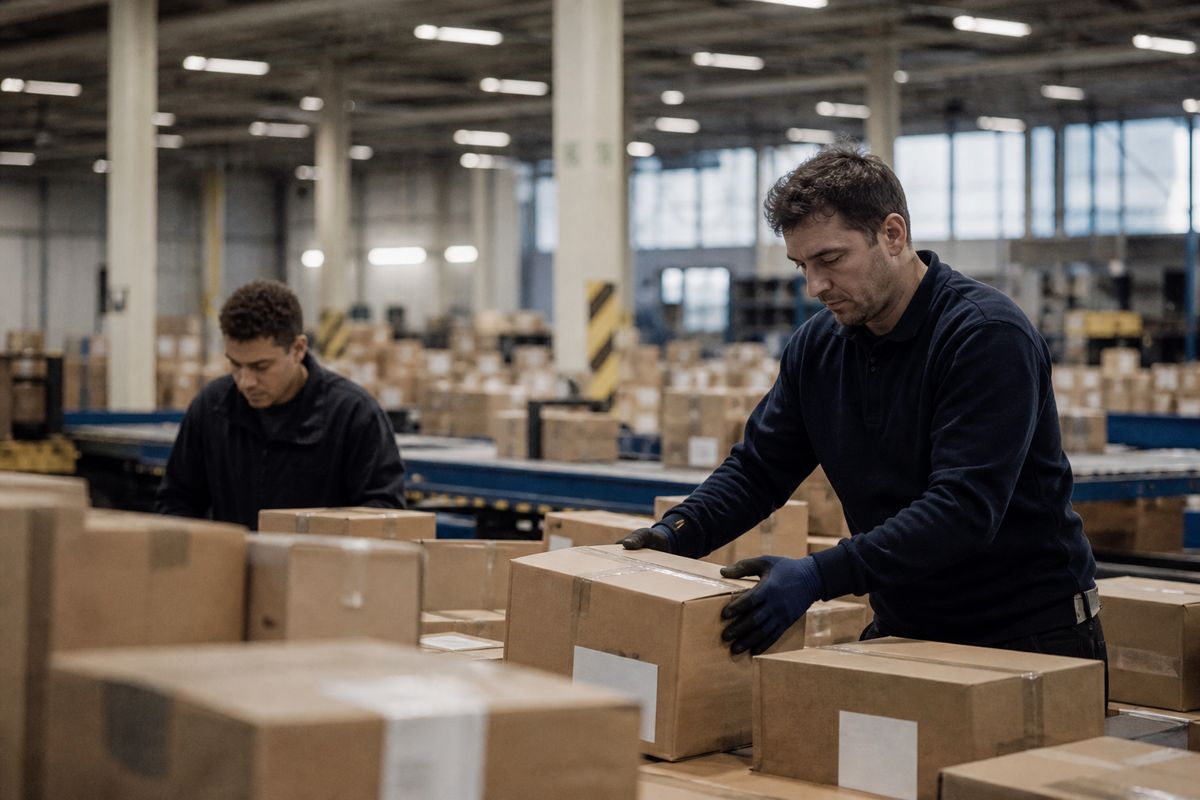
The underlying theme is automation. Fulfilment is rapidly becoming an industry where artificial intelligence makes the small decisions that add up to big financial results. The advantage does not come from one single technological feature. It comes from layering AI on top of processes that have historically been manual. In the words of Efulfilment Europe, the difference between scale and stagnation is execution. Execution, in this case, is a combination of physical infrastructure and predictive software working in harmony.
What This Means For You: choosing a fulfilment strategy that scales
For an online retailer, the decision to invest in better fulfilment services comes down to three questions. First, are you losing customers or revenue because of slow delivery? Second, is your team spending too much time on operational tasks such as printing labels, booking couriers, and handling returns? Third, are you carrying too much stock in one location while running out of stock in another? If the answer to any of these questions is yes, then it is time to look seriously at a modern fulfilment partner. The market is not short of options, but you have to choose carefully.
Start by mapping your current weaknesses. If your customers are in the United Kingdom, consider a UK-based centre with certified awards and proven on-time rates of 99% or higher. If you sell across several European markets, look for a provider with continental infrastructure and next-day delivery coverage. Ask suppliers how they handle forecasting and data. Do they use AI to predict stock levels? Do they integrate with your existing e-commerce software? A partner that does not invest in automation will quickly become a bottleneck as your order volumes climb.
The takeaway is straightforward. E-commerce fulfilment is not a cost to be minimised; it is a lever for growth. Retailers who treat their warehouse as a strategic asset, rather than a backup plan, will gain an edge in a crowded market. Before you sign a contract, check the fine details: same-day processing deadlines, returns duration, branded packaging options, and how the provider manages goods that are close to their expiry date. Test them with a small batch of orders first, measure their performance, and only then scale. The smoothest operations feel simple on the surface, but they are built on layers of intelligent infrastructure. Choose a partner that understands your products, your customers, and the speed that modern commerce demands.
The road ahead for e-commerce fulfilment in 2026 and beyond
There is no sign that consumer demand for faster delivery will fade. If anything, the pressure will intensify. As artificial intelligence becomes cheaper and more accessible, even small fulfilment providers will be able to offer predictive forecasting and autonomous routing. This will raise the bar for everyone. Retailers who fail to modernise their fulfilment approach will find themselves paying higher costs per order and losing repeat sales to competitors that offer seamless, two-day or even next-day delivery experiences.
At the same time, the definition of good fulfilment is expanding. Beyond speed, customers care about communication and flexibility. They want real-time tracking, easy returns, and delivery windows that fit around work schedules. Fulfilment centres that invest in customer service, as MCF does through proactive handling of courier claims and lost stock, are likely to hold onto their retail clients for longer. The same logic applies across Europe, where cross-border trade depends on trust and reliability.
Eventually, the industry may reach a point where instant same-day delivery becomes standard in dense urban areas, and where stock is held not in massive central warehouses but in micro-fulfilment hubs within a few kilometres of shoppers. Some new logistics companies are already experimenting with such models. Yet for most growing businesses, the priority should not be tomorrow's futuristic technology. It should be selecting a partner that can fulfil orders quickly and accurately today, while having the data infrastructure to improve tomorrow. In e-commerce, execution is everything, and in 2026, execution is more intelligent than ever.