DHL eCommerce fuel surcharge rises again, and it is not just a pricing footnote
The latest DHL eCommerce update is blunt: the DHL eCommerce fuel surcharge for September 2026 is 28.00%. That is up from 23.50% in August 2026 and 22.75% in July 2026, according to DHL eCommerce’s published monthly index. On paper, it is a single line item. In practice, it lands right in the middle of a wider shift in parcel delivery economics, where carriers are trying to balance volatile operating costs with customer expectations that delivery should be cheap, fast, and perfectly trackable.
And there is a second thread running alongside the surcharge story: DHL eCommerce is also sharpening the customer experience around delivery visibility and issue resolution. The company’s customer service guidance leans heavily on track and trace, neighbour checks, locker collection codes, and sender initiated investigations. Meanwhile, the DHL eCommerce Solutions app is rolling out features such as proof of delivery imagery, push notifications for shipment updates, and a persistent chatbot entry point. Put the two together and a clear narrative emerges: costs are rising, so transparency and self service have to get better, quickly.
This matters well beyond DHL itself. Fuel surcharges are a bellwether for the broader logistics market, and the operational playbook on “delivered but not received” disputes is increasingly becoming the industry standard. The question is not whether customers will notice. It is how businesses adapt before their margins get quietly eaten alive.
What exactly has changed: the September 2026 DHL eCommerce fuel surcharge and how it is calculated
DHL eCommerce states that its September 2026 fuel surcharge is 28.00%. The same index lists August 2026 at 23.50% and July 2026 at 22.75%. That month on month rise is meaningful because the surcharge is applied to the transportation rate and also to transportation related options and surcharges. In other words, it is not simply a small add on to base carriage. It can compound across a shipment’s full price structure.
The mechanism is also spelled out. DHL links the surcharge to the Dutch consumer price of diesel fuel as published by CBS, with taxes and duties included. There is a table of diesel price bands and corresponding surcharge percentages, running from 7.0% at the low end up to 29.50% at the top band shown. DHL also notes a timing lag: because of fuel price publication dates, the surcharge is applied in the following month. So a mid June publication can determine July’s surcharge. That lag is not a technicality. It means shippers can feel a “delayed echo” of fuel price movements, which complicates forecasting.
DHL also reserves the right to change the index and the table without prior notice. Fair enough from a carrier risk perspective, but it reinforces a reality for retailers and marketplaces: fuel surcharges are not a stable input cost. They are a variable, and they can move quickly. If a business is still pricing delivery as if it is a fixed cost, it is effectively gambling with its own profitability.
One more detail is easy to overlook but important: DHL explicitly flags that non standard packages may take an extra day in transit and can attract an additional surcharge. That turns packaging discipline into a commercial lever. When fuel surcharges are high, the penalty for dimensional inefficiency becomes even more painful.
The operational story behind the numbers: delivery exceptions, lockers, and “delivered but not received”
Rising surcharges tend to push customers to scrutinise service quality. DHL eCommerce’s customer service guidance reads like a map of the most common friction points in modern parcel delivery, especially in dense residential networks. When track and trace shows a parcel as delivered but the recipient has not received it, DHL’s first advice is practical: check with the neighbours and check any (external) mailbox. The implication is clear. Last mile delivery is messy, and the final handoff can involve safe places, neighbour drops, and human error in scanning or note taking.
Then comes the line that will resonate with anyone who has ever stared at a “delivered” status in disbelief: the parcel is often still on its way. DHL advises waiting one working day because, in many cases, a shipment that appears delivered in tracking is actually delivered the next working day. DHL does not provide a percentage or volume figure for how often this happens, and it should not be assumed. But the acknowledgement is significant. It effectively concedes that tracking status can be wrong in edge cases, which is exactly why carriers are investing in better proof of delivery and real time notifications.
If the parcel still does not appear, DHL’s process pushes the recipient back to the sender, typically the online shop. The sender initiates an investigation and has additional shipment information that is relevant, such as physical characteristics and size. This is a standard carrier model, but it has consequences. It means merchants need internal workflows for delivery disputes, not just customer service scripts. And it means the quality of shipment data captured at label creation becomes operationally valuable later.
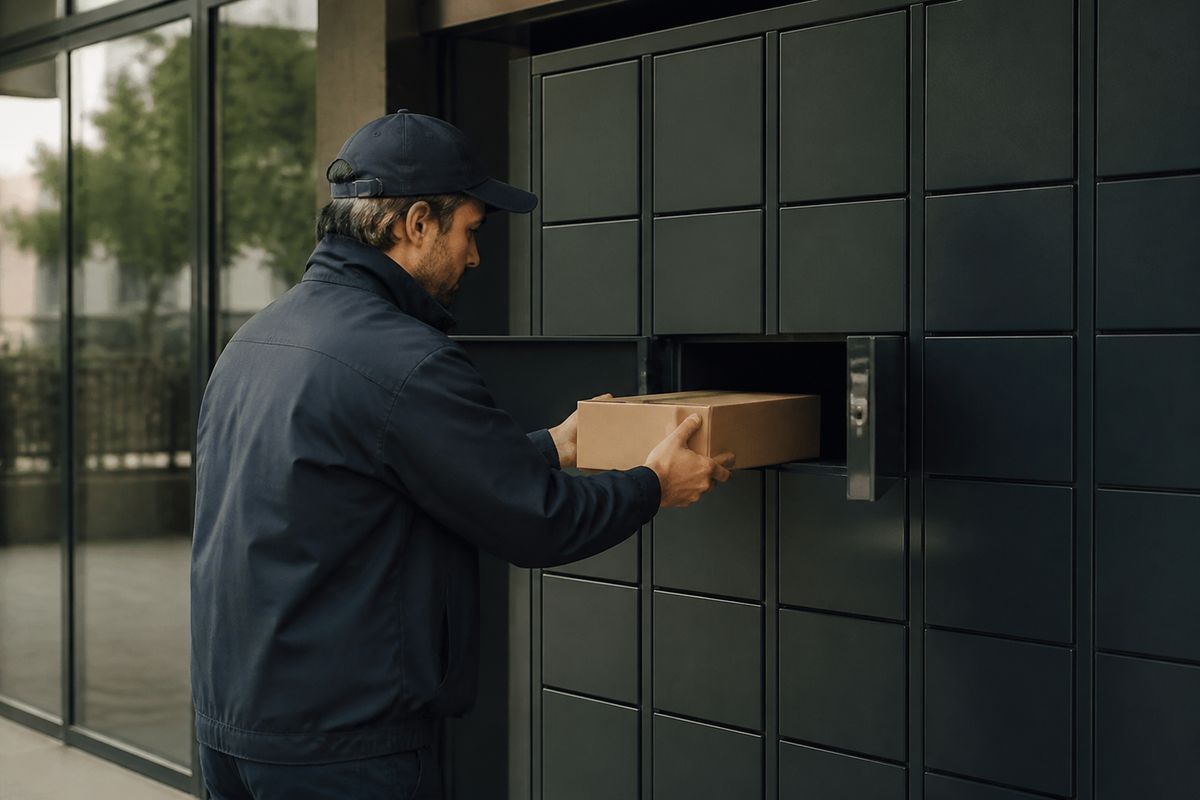
Lockers add another layer. DHL provides a step by step plan for missing locker collection codes: check the My DHL app, check spam, double check the location because a courier may redirect to another collection point, then contact customer service via chat with the tracking number ready. The detail about redirection is telling. Lockers are sold as frictionless, but capacity constraints and technical issues can still push parcels into manned service points, where the rules and customer expectations differ.
Technology and product context: apps, proof of delivery, and the push towards self service
The DHL eCommerce Solutions app listing provides a window into where DHL is putting product effort. The app positions itself around fast booking, shipment management, one click tracking, reporting, and access to 1000+ DHL eCommerce Service Point locations. It also highlights value added services such as Cash on Delivery (COD), Freight Cost On Delivery (FOD), and insurance. Not every market uses COD heavily, but where it is common, it changes the risk profile of delivery. A failed delivery is not just a service failure, it is a cash flow disruption.
The most newsworthy part is in the version history. A release dated 25 May (the year is not stated in the source material, so it should not be assumed) includes a Proof Of Delivery feature: when a shipment is delivered, the tracking screen should show a “View proof of Delivery” link only if an additional delivery image exists in the tracking database, and clicking it opens the delivery photo. That conditional design matters. It suggests DHL is not claiming universal photo proof across all deliveries, but rather enabling it where available. That is realistic, and it is also a hint at how carriers roll out capability: start with partial coverage, then expand.
Another release item introduces real time push notifications for shipment updates, sending notifications with shipment ID and status for key delivery milestones. Again, the source material does not list the exact milestones, so they cannot be enumerated here. But the direction is obvious. Push notifications reduce inbound “where is my parcel” contacts, and they can pre empt disputes by warning customers about delays, redirects, or attempted deliveries.
And then there is the chatbot icon, described as persistent, opening instantly without extra login, supporting automated and live chat, and working consistently “without extra steps”. That language is not accidental. It is a direct response to the reality that customers abandon support journeys when they are forced through authentication loops or channel switching. If fuel surcharges push prices up, the tolerance for support friction goes down. DHL appears to be designing for that.
Commercial and legal backdrop: liability limits, compensation rules, and why senders carry the burden
When parcels go missing, the money question arrives fast. DHL eCommerce’s guidance is explicit: if a parcel cannot be found, it is the shipper who can claim any potential compensation. The carrier’s liability is limited, and the compensation depends on destination. For a domestic shipment within the Netherlands, DHL states compensation is €3.40 per kg. For an international road shipment, it is approximately €10.00 per kg. DHL attributes these compensation levels to Dutch law for domestic road transport and to the CMR Convention for international road transport.

These figures are not just legal trivia. They shape how merchants should think about risk. A high value, low weight item can be commercially exposed if shipped uninsured, because compensation is weight based. DHL’s own app marketing highlights insurance as a value added service, which fits neatly into this risk gap. The logic is straightforward: if liability is limited by law and convention, insurance becomes the mechanism to align compensation with the actual value of goods.
There is also an operational implication. DHL notes that the sender has additional package information that is important for investigations, including physical characteristics and size. That pushes businesses towards better data capture and retention. If a merchant cannot quickly provide accurate shipment details, investigations slow down, customer refunds accelerate, and the cost lands back on the merchant. Not glamorous, but it is the difference between a scalable delivery operation and a constant fire drill.
Finally, DHL’s documentation around customs forms and invoices, including the requirement to include an invoice for shipments to countries with customs clearance, reinforces another point: cross border shipping is paperwork heavy, and errors create delays. DHL does not provide delay statistics here, so none should be inferred. But the direction is clear. In a high surcharge environment, every avoidable delay is more expensive because it ties up inventory, triggers customer contacts, and can lead to reshipments.
What the September 2026 DHL eCommerce fuel surcharge signals for the logistics and e commerce industry
A 28.00% fuel surcharge in September 2026 is, first and foremost, a reminder that carriers are still in a world where energy costs can swing and pricing mechanisms have to keep up. Surcharges exist to protect carrier networks from absorbing fuel volatility. But they also shift volatility onto shippers, especially SMEs that do not have sophisticated pricing models. Larger retailers can sometimes smooth this through dynamic pricing or negotiated contracts. Smaller merchants often cannot, and that is where margin erosion quietly happens.
Second, the surcharge story is inseparable from the service story. When delivery costs rise, customers become less forgiving about missed scans, locker code issues, and ambiguous “delivered” statuses. That is why proof of delivery photos and push notifications are more than nice to have features. They are cost control tools. Every avoided contact to customer service saves money. Every resolved dispute without a reshipment saves more. And every clear delivery image can be the difference between a quick conclusion and a week of back and forth.
Third, the industry is moving towards a model where the recipient experience is increasingly app mediated. DHL’s customer service flows repeatedly point to the app, chat, and track and trace. This is not unique to DHL, but the specifics matter. A persistent chatbot icon that works without extra login is designed to reduce friction at the exact moment a customer is annoyed. That is a deliberate design choice, and it reflects a broader trend: logistics companies are becoming software companies, at least in the customer facing layer.

Historically, parcel delivery differentiation was about network reach and delivery speed. Those still matter, obviously. But the competitive edge is now also about exception handling. The carrier that can prove delivery, explain delays clearly, and route customers to the right resolution path will win loyalty, even if the base service is similar. In a surcharge heavy environment, that loyalty is valuable because customers are more likely to accept price increases when the service feels controlled and transparent.
What This Means For You
For retailers and shippers, the immediate takeaway is unglamorous but essential: recalculate delivery economics for September 2026. A 28.00% fuel surcharge applied to transportation rates and related options can materially change per order profitability. Businesses that offer “free delivery” should stress test whether it is still sustainable, and if it is not, decide whether to introduce thresholds, adjust product pricing, or segment delivery options. And yes, it is worth checking how non standard parcel dimensions might trigger extra surcharges or longer transit times, because packaging is one of the few levers a merchant can control quickly.
For customer service teams, the practical move is to align internal scripts with DHL’s actual resolution pathways. When a parcel shows as delivered but is not received, DHL’s guidance is: check neighbours and mailbox, wait one working day, then contact the sender to initiate an investigation. That means merchants should build a clear timeline for when they open a carrier case, what evidence they collect, and how they communicate expectations to customers. If the business uses lockers, it should also proactively educate customers on where to find collection codes, including checking the app and spam folders, and on the possibility of redirection to a service point.
For consumers, the key is to treat tracking as a strong signal, not an infallible truth. If a delivery shows as completed but nothing is there, the most effective first steps are the simple ones: check safe places, check neighbours, and allow the one working day buffer that DHL itself suggests. If the parcel is genuinely missing, the consumer’s fastest route is usually through the retailer, because the sender holds the relationship with the carrier and the detailed shipment data needed for an investigation. It is not always fair, but it is how the system is organised.
Closing thoughts: higher surcharges, higher expectations, and a more data driven last mile
DHL eCommerce’s September 2026 fuel surcharge of 28.00% is a clear marker of cost pressure in parcel logistics. But the more interesting story is how the company is responding around the edges: clearer customer service playbooks, app led tracking, proof of delivery imagery where available, push notifications, and lower friction support via chat. These are not random features. They are the tools carriers use to keep networks efficient when volumes are high and costs are volatile.
The broader industry lesson is simple. When delivery gets more expensive, the tolerance for uncertainty collapses. Customers want to know where the parcel is, what went wrong, and what happens next, without having to fight for answers. Carriers and merchants that invest in data quality, packaging discipline, and exception handling will cope. Those that do not will pay twice, once in surcharges, and again in refunds, reshipments, and reputational damage. And that second bill is usually the bigger one.