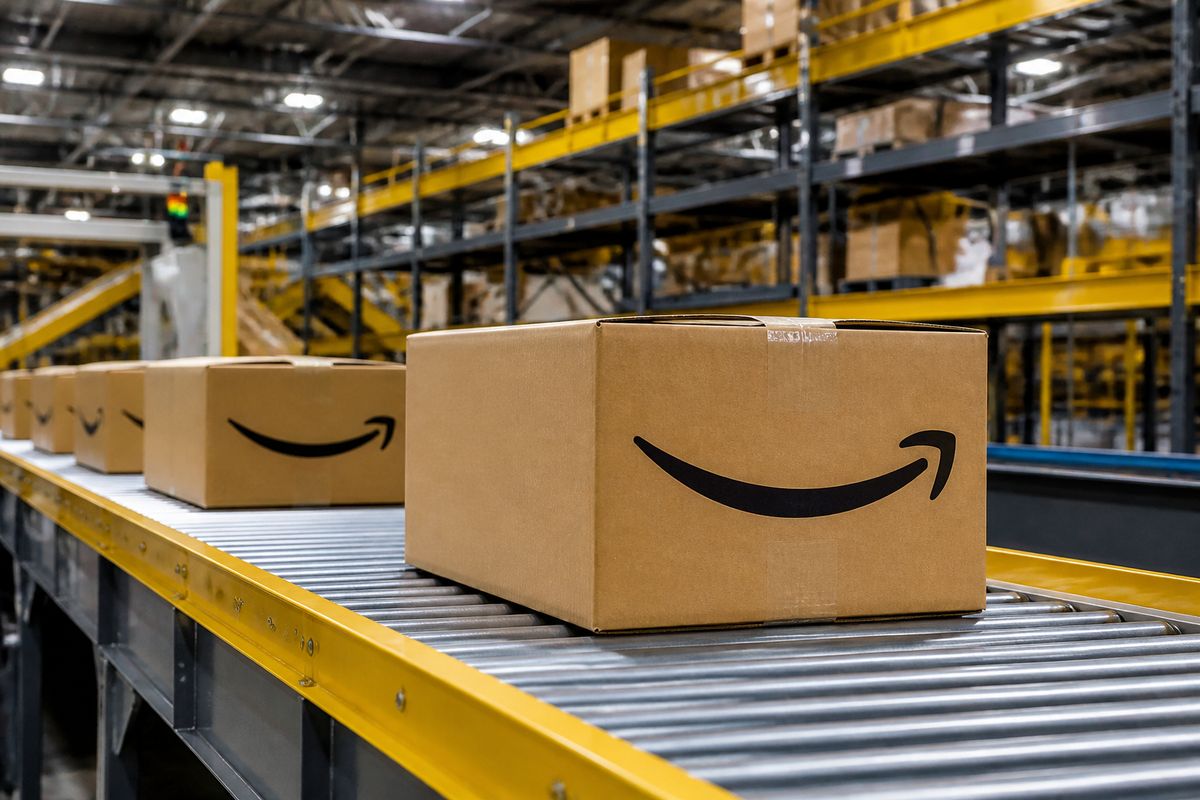
Amazon FBA shifts back to standard rates in 2026, and sellers feel it immediately
Fulfillment by Amazon (FBA) sits at the centre of modern marketplace logistics, and in 2026 Amazon tweaks the economics again. The key development is straightforward but consequential: starting 15 January 2026, Amazon switches its FBA fulfilment fees back to non-peak (standard) rates. On paper, that sounds like a relief after the expensive fourth quarter. In practice, it is also a recalibration of how Amazon calculates shipping weight across size tiers, and it introduces sharper consequences for products that fall into the “Overmax” category.
This is not just a line item change. FBA fees influence pricing, advertising budgets, inventory strategy, and even product design decisions. And because FBA automatically qualifies listings for Prime, the fee structure is tightly bound to visibility, conversion, and Buy Box performance. Sellers who treat the January reset as a passive “nice to have” tend to miss the bigger story: Amazon is nudging merchants towards tighter packaging discipline, faster inventory turns, and more deliberate catalogue segmentation between FBA, FBM (merchant fulfilment), and hybrid models.
The headlines, then, are really about a familiar Amazon pattern: simplify the headline, complicate the mechanics. Standard rates return, but the rules around unit weight versus dimensional weight and the penalties for oversized inventory become more explicit. For some sellers, that is margin back in the bank. For others, it is a warning shot.

What changes on 15 January 2026, and why the details matter for Amazon FBA
Amazon’s 15 January 2026 change resets fulfilment fees to standard rates and clarifies how shipping weight is calculated for different size tiers. According to the source material, small standard items and extra-large 150+ lbs items calculate shipping weight based on unit weight. For all other size tiers, Amazon uses the greater of unit weight or dimensional weight. That sounds technical, because it is. But it is also the difference between a product being comfortably profitable and quietly bleeding margin on every order.
Then there is the “Overmax” trigger. Products in the Extra-Large (up to 150lb) tier that exceed 96 inches on the longest side, or exceed 130 inches for length plus girth, are considered Overmax. Those items incur an additional fee on top of standard FBA fulfilment fees. In other words, the reset to standard rates does not mean “cheaper for everyone”. It means “standardised for most, punitive for the outliers”. Fair enough, perhaps, given the operational burden of awkward freight. But sellers need to know where the cliff edge is.
Storage fees remain a separate lever, and the seasonal pattern is still very much alive. For standard-size storage, the monthly charge from January to September is $0.69 per cubic foot, rising to $2.40 per cubic foot from October to December. For oversized storage, it is $0.48 per cubic foot from January to September and $1.20 per cubic foot in October to December. Those figures in the source material are US dollar denominated, and the material does not provide UK rates, so any seller operating in the UK or EU needs to treat them as directional rather than definitive.
One more point that tends to get overlooked: Amazon frames the fulfilment fee as a per-unit charge that covers picking, packing, shipping, customer service, and returns. That bundling is the whole appeal of FBA. But it also means cost visibility can be deceptively low until a seller models it properly across product mix, packaging changes, and inventory age. Amazon provides an FBA calculator for storage and fulfilment costs, and the sources repeatedly stress using the official tools for precise estimates.
How Fulfillment by Amazon (FBA) works, and why Prime eligibility keeps sellers hooked
At its core, Fulfillment by Amazon is a managed logistics service: sellers send inventory to Amazon fulfilment centres, and Amazon handles storage, packing, shipping, customer service, and returns. The operational flow is simple enough: inventory is shipped to a fulfilment centre, stored, then picked and packed when a customer orders, and delivered under Amazon’s network. The seller supplies product and demand generation. Amazon supplies the logistics machine.
That machine is not small. The source material notes Amazon has some 100 warehouses around the US, and while it does not provide a global count, the implication is clear: FBA gives third-party sellers access to infrastructure they could not realistically replicate. For sellers who want fast delivery without running a warehouse, FBA is positioned as a “one-stop solution”. And yes, it is a big deal. Fast delivery is no longer a differentiator, it is table stakes.
The hook that keeps sellers coming back is Prime. Products fulfilled through FBA automatically qualify for Prime, which typically improves conversion and can increase the likelihood of winning the Buy Box. One of the sources describes FBA as a way for third-party sellers to compete at scale, particularly for brands expanding across European marketplaces where cross-border logistics can get messy quickly. The promise is operational simplicity and immediate access to large pools of active buyers.

But the sources also underline the trade-offs. FBA can be costly for slow-moving, bulky, or multi-channel inventory. Sellers also face shipping restrictions and eligibility requirements, packaging standards, and size or weight limits that affect how and where items are fulfilled. In plain English: Amazon will do the work, but on Amazon’s terms. And those terms increasingly reward sellers who engineer their catalogue for Amazon’s network rather than trying to force awkward products through it.
The competitive alternatives, FBA vs FBM vs Seller Fulfilled Prime, and why hybrid is becoming the default
The FBA conversation in 2026 is no longer “use it or do it yourself”. It is a three-way strategic choice: FBA, FBM (Fulfilment by Merchant, also called MFN in Amazon reporting), and Seller Fulfilled Prime (SFP). The sources describe SFP as a model where sellers store and ship from their own warehouse while still offering Prime delivery. That is attractive for brands that want Prime conversion benefits but need more control over packaging, kitting, or inventory placement.
FBM is the more traditional route: the seller handles storage, fulfilment, and returns, either in-house or via a third-party logistics provider. The advantage is control, especially for branding, packaging, and storage conditions. The downside is operational complexity and, typically, less algorithmic advantage compared to FBA listings. The source material also notes that many sellers compare SFP vs FBA to find the right balance between control, cost, and convenience. That “balance” is doing a lot of work in that sentence, because it is where most sellers win or lose margin.
What is increasingly common is a hybrid approach. One source explicitly frames this as using FBA for best-selling products and FBM for others. That aligns with the performance guide’s argument that the “FBA always wins” assumption is too simplistic. Lightweight, fast-moving products often thrive with FBA due to Prime eligibility and conversion. Slow-moving, oversized, or high-margin items may perform better under merchant fulfilment where storage charges and dimensional weight pricing do not erode profitability as aggressively.
And there is a subtle strategic angle here. Sellers who treat fulfilment as a catalogue-level decision, rather than a business-level ideology, can optimise by segment. They can use FBA where Amazon’s network is a genuine advantage, and use FBM or a 3PL where the product economics demand it. Not exactly groundbreaking, but surprisingly few businesses do it rigorously.

Costs, margins, and the real economics of Amazon FBA in 2026
FBA costs break into two main buckets: fulfilment fees and storage fees. Fulfilment fees are per unit and vary by category, size, and weight. Storage fees are monthly and depend on cubic volume, with higher rates in the October to December peak period. The sources provide specific US storage rates, and they also provide indicative European fulfilment fee ranges for example products. Those examples are not official price cards, but they are useful for understanding scale.
One source offers indicative EU examples: a compact product weighing around 300g might incur an estimated fulfilment fee of roughly €3.50 to €4.50 per unit, plus a monthly storage cost of a few cents per unit. A standard product around 1kg could see fulfilment fees in the range of €5.00 to €7.00 per unit, depending on marketplace. The same source is careful to say these figures vary by period and marketplace and that sellers should use the FBA revenue calculator in Seller Central for accurate estimates. That caution matters. Fee schedules change, and sellers who build pricing off stale assumptions tend to get punished.
The performance guide adds colour on why “wrong fulfilment decisions” can be expensive. It points to fee increases in recent years and highlights how long-term storage fees, aged inventory surcharges, and dimensional weight pricing can eat into margins, especially for slow-moving or oversized products. The guide also notes that relying exclusively on FBM may cost sales because Amazon’s algorithm tends to favour FBA listings and the Prime badge can materially increase conversion. It references reports of conversion rate differences of 50 to 200 percent between FBA and FBM listings, but it does not provide a specific dataset or source beyond that statement, so it should be treated as anecdotal rather than a verified benchmark.
There is also a market structure point worth stating plainly. In the United States, an estimated 73 percent of Amazon sellers use FBA, according to Statista as cited in the source material. That level of adoption creates a competitive baseline. If most sellers in a category are Prime eligible via FBA, then opting out is not a neutral choice. It is a strategic bet that the brand can win on differentiation, price, or niche demand without the same fulfilment promise.
Industry impact, Amazon’s quiet push towards packaging discipline and inventory velocity
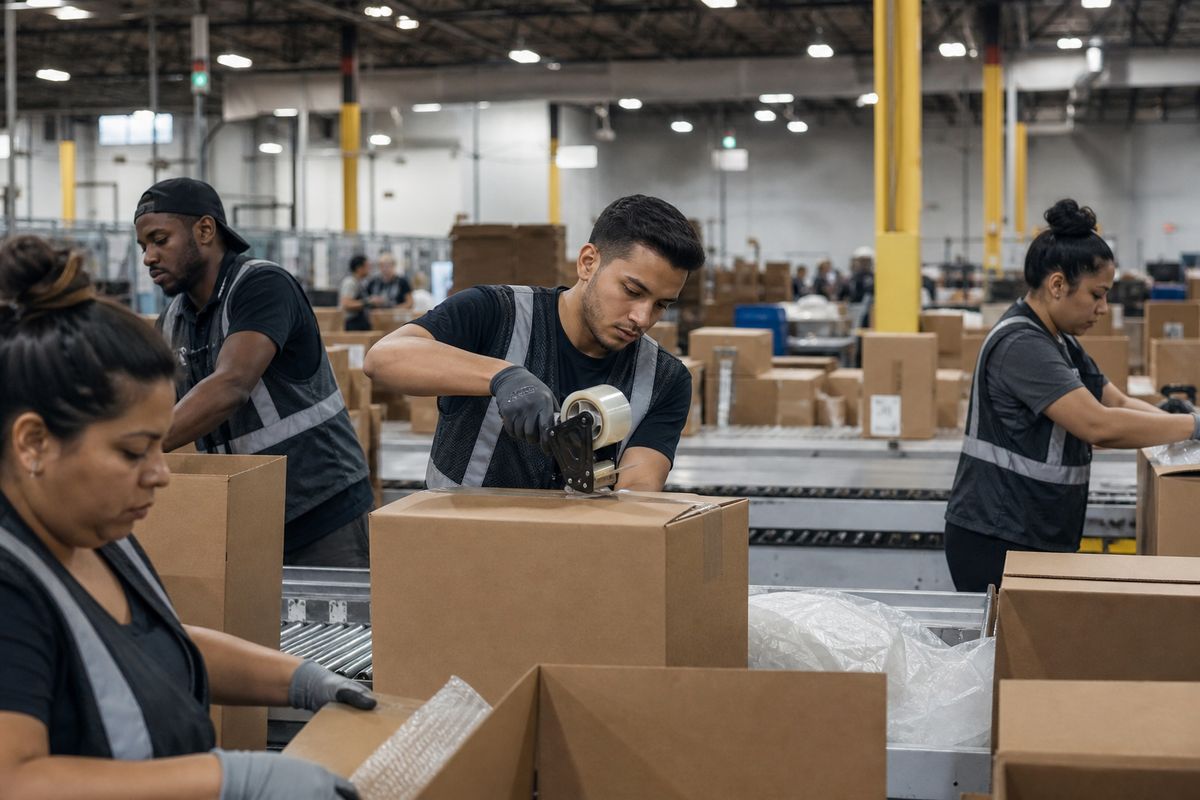
Zoom out, and the 15 January 2026 reset looks like more than seasonal housekeeping. Amazon is standardising around a model that rewards packaging efficiency and penalises operational friction. The dimensional weight emphasis for most size tiers is a direct incentive to reduce wasted space, tighten cartons, and avoid “air shipping”. And the Overmax definition draws a bright line around products that stress the network. Sellers who operate in furniture, long goods, or bulky recreational categories will recognise the message instantly: either redesign, repackage, or rethink fulfilment.
This matters for the wider ecommerce logistics industry too. When Amazon tightens its fee logic, 3PLs and multi-carrier platforms often see increased interest from sellers who want optionality. The source material positions alternative fulfilment networks as a way to avoid being locked into one platform, one warehouse, or one sales channel. Even without naming every competitor, the strategic point holds: sellers are increasingly wary of single-thread dependency on Amazon’s fulfilment economics.
For European brands, the operational appeal of FBA remains strong because it reduces cross-border complexity. But the same brands are also more likely to be multi-channel, selling on other marketplaces and direct-to-consumer. That is where FBA’s limitations show up. Inventory placed into Amazon’s network is not always easy to redeploy elsewhere, and fees can make slow-moving stock painful. The result is a growing appetite for hybrid models that keep Amazon as a primary channel while preserving flexibility.
Historically, Amazon’s fulfilment evolution follows a pattern: broaden access, then refine incentives. FBA launched to help third-party sellers compete at scale. As adoption rises, Amazon tunes the fee structure to manage network capacity and profitability. The 2026 changes fit that arc. Standard rates return, yes. But the underlying message is that sellers need to behave like disciplined operators, not opportunistic listers.
What This Means For You
For sellers, the practical takeaway is that 2026 is a year to get more forensic about fulfilment economics. The January reset to standard rates is a natural moment to rerun product-level profitability models, not just at the catalogue level but at the SKU level. That means measuring how each item behaves under unit weight versus dimensional weight rules, and checking whether any products are drifting towards Overmax thresholds. If a product is close to 96 inches on the longest side, or close to 130 inches length plus girth, it is living dangerously. A small packaging change can be the difference between “fine” and “fee shock”.
It also means treating storage as a strategic lever, not an afterthought. The storage fee jump from October to December is steep in the US figures provided, and even if local rates differ, the seasonal logic is consistent. Sellers should plan inbound shipments and promotions around inventory velocity, especially for slow movers. If a product does not turn quickly, FBA convenience can become a margin trap. A hybrid approach often makes sense: keep fast-moving, lightweight lines in FBA for Prime conversion, and shift bulky or slow-moving items to FBM, SFP, or a 3PL where storage terms and packaging control are more favourable.
Finally, sellers should stop thinking of Prime eligibility as a binary. FBA is the simplest route to Prime, but it is not the only route. Seller Fulfilled Prime exists for a reason, and it can be a strong fit for businesses with mature warehouse operations that want to keep control while still meeting Prime delivery standards. The decision should be driven by performance metrics that the sources highlight: conversion rate, return rates, fulfilment costs, inventory turnover, and net margin. The businesses that win in 2026 are the ones that measure, test, and switch fulfilment methods by segment. The rest will keep arguing about “FBA vs FBM” as if it is a philosophical debate.
Closing thoughts, Amazon FBA is still powerful, but it is no longer forgiving
Amazon FBA remains one of the most powerful levers in ecommerce. It compresses years of logistics investment into a service that even small sellers can access, and it brings Prime eligibility that can materially change demand. With an estimated 73 percent of US Amazon sellers using FBA, it is also the default competitive posture in many categories. That is the upside, and it is real.
But 2026 underlines the other truth: FBA is a system optimised for Amazon’s network, not for any individual seller’s margin structure. The 15 January 2026 return to standard rates is welcome, yet the more important story is the tightening around dimensional weight and the explicit Overmax penalties. Sellers who respond with better packaging, cleaner catalogue segmentation, and faster inventory turns will find FBA a strong fit. Sellers who ignore the mechanics will keep wondering why revenue looks healthy but profit does not. And that, in the end, is the only metric that matters.